
An expert guide to material specifications, application standards, and industrial reliability in modern piping solutions.
In the contemporary landscape of civil engineering and residential building, the selection of materials dictates the longevity and efficiency of the entire infrastructure. Among the most versatile and essential components is the PVC pipe. Polyvinyl Chloride, or PVC, has fundamentally transformed how we approach fluid transport, electrical housing, and structural support. However, selecting the right variant involves much more than simply picking a diameter. It requires a deep understanding of pressure ratings, chemical compatibility, and environmental stressors that the system will face over decades of service.
Choosing the wrong material can lead to catastrophic failures, including leaks, structural collapses, or electrical hazards. As construction projects grow in complexity, the demand for precision-engineered components has never been higher. This guide serves as a comprehensive resource for architects, contractors, and project managers to navigate the technical nuances of high-quality plastic piping. By focusing on the specific needs of your project, you can ensure a reliable installation that meets both safety standards and budgetary constraints.
Decoding Material Grades and Pressure Ratings
One of the primary considerations when evaluating a PVC pipe for any construction project is the "Schedule" of the pipe. The most common designations are Schedule 40 and Schedule 80. These schedules refer to the wall thickness of the pipe. Schedule 40 is the standard choice for most residential plumbing and irrigation tasks where moderate pressure is expected. It offers a balance of strength and flexibility, making it easy to handle and install. However, for industrial environments or high-pressure water mains, Schedule 80 is the superior option due to its thicker walls and higher pressure tolerance.
Beyond the schedule, one must also consider the SDR (Standard Dimension Ratio). SDR provides a constant ratio between the outside diameter and the wall thickness, ensuring that the pressure rating remains consistent regardless of the size. This is particularly important for large-scale municipal projects where long-distance water transport is required. Understanding these numerical values is crucial because a mismatch between the pipe's rating and the system's actual pressure can result in immediate bursting or long-term fatigue. Expert installers always verify these specifications against the local building codes and the engineering blueprints before procurement.
Application-Specific Selection Criteria
Not all construction projects use pipes for water. In many instances, the primary role is protection or structural framing. For example, electrical projects require specialized conduits to protect wiring from moisture and physical damage. These pipes must have flame-retardant properties and be smooth on the interior to facilitate wire pulling. On the other hand, drainage systems focus more on the flow rate and the ability to withstand the weight of backfill soil without deforming. In these cases, the crush resistance of the material becomes the most important metric rather than the internal burst pressure.
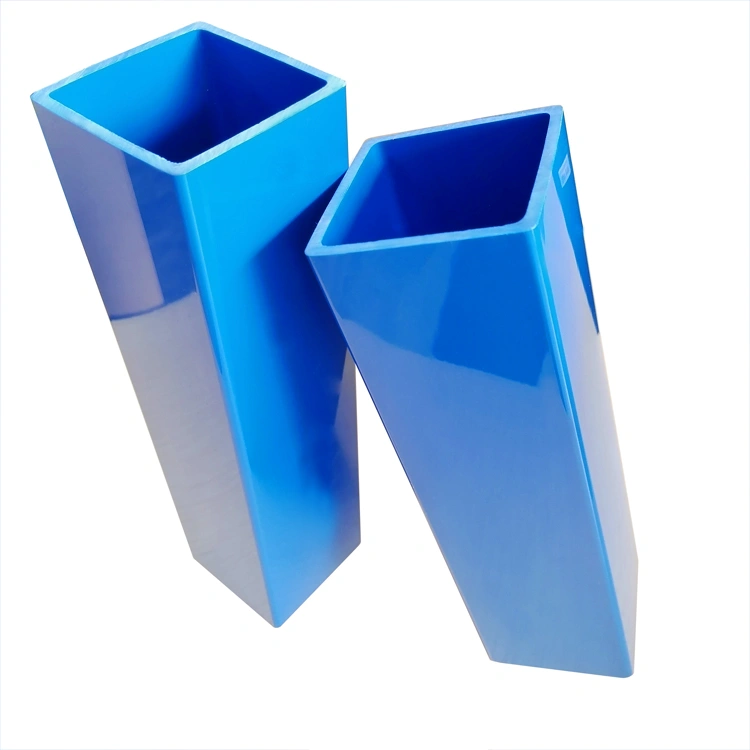
Furthermore, specialized profiles like square or rectangular pipes are increasingly popular in ventilation and structural trim. These shapes offer different mechanical advantages, such as easier mounting against flat surfaces and improved aesthetics for exposed installations. When selecting these, one must ensure that the extrusion process has maintained uniform wall thickness across the corners, as these are often the points of maximum stress. Whether you are dealing with a standard circular conduit or a customized structural profile, the intended application must dictate the material formulation and the manufacturing tolerances.
Environmental Resilience and Chemical Compatibility
The environment in which the piping is installed can be just as important as the fluid it carries. For outdoor applications, UV resistance is a non-negotiable requirement. Standard plastic can become brittle and crack when exposed to prolonged sunlight. High-quality manufacturers incorporate UV stabilizers into the PVC resin to prevent this degradation. Similarly, in industrial settings where the pipe may come into contact with acids, alkalis, or salts, verifying chemical compatibility is essential. PVC is naturally resistant to many corrosive substances, which gives it a significant advantage over metal alternatives that may rust or corrode over time.
Temperature is another critical factor. Most standard PVC systems are rated for temperatures up to 140 degrees Fahrenheit. For hot water applications or high-heat industrial processes, CPVC (Chlorinated Polyvinyl Chloride) may be required, as it can handle temperatures up to 200 degrees. Ignoring the temperature limits can lead to the material softening and losing its structural integrity. Therefore, a thorough site assessment involving temperature fluctuations and potential chemical exposure is a prerequisite for a successful selection process.
The Shangyu Advantage: Excellence in Plastic Extrusion
As a professional manufacturer with over two decades of expertise, Shangyu has established itself as a global leader in high-performance plastic solutions. Our commitment to quality begins with the selection of premium raw materials and extends through our state-of-the-art extrusion technology. We specialize in producing a diverse range of products, including the standard pvc pipe, which is engineered to meet rigorous international standards for durability and safety. Our products are widely utilized in construction, telecommunications, and industrial infrastructure projects worldwide.
Our competitive edge lies in our ability to provide customized solutions. From the pvc electrical conduit for wire protection to specialized pvc square pipe for structural needs, Shangyu ensures every millimetre of our product is inspected for consistency. We offer superior plastic pipe options that boast high impact resistance and long-term weatherability. By choosing Shangyu, you are not just buying a component; you are investing in a partnership backed by technical expertise and a proven track record of excellence in the plastic industry.
Advanced Extrusion Lines
ISO Certified Quality Control
Global Shipping & Support
Eco-Friendly Formulations
Frequently Asked Questions
Q1: What are the main benefits of using a PVC pipe in construction?
A: PVC offers exceptional durability, corrosion resistance, and a high strength-to-weight ratio. It is cost-effective to transport and install compared to metal pipes, and it has a long lifespan, often exceeding 50 years under proper conditions.
Q2: Can a PVC pipe be used for high-temperature water systems?
A: Standard PVC is generally rated up to 140 degrees Fahrenheit. For temperatures higher than this, we recommend using CPVC, which is specially formulated to handle hot water and industrial heat without losing structural integrity.
Q3: How do I determine the correct size of PVC pipe for my drainage project?
A: Size is determined by the expected volume of fluid flow and the slope of the installation. For most residential drainage, 3-inch or 4-inch pipes are standard, but commercial projects may require much larger diameters based on hydraulic calculations.
Q4: Is the Shangyu PVC pipe UV resistant for outdoor use?
A: Yes, Shangyu incorporates specialized UV stabilizers during the manufacturing process to ensure our products remain durable and do not become brittle even when exposed to direct sunlight for extended periods.
Q5: Are there different colors available for a PVC pipe?
A: While white is the most common, pipes can be manufactured in various colors like grey, blue, or green to indicate their use (e.g., electrical vs. potable water) or for aesthetic architectural integration.
Conclusion
Selecting the right components for your construction project is a balance of technical understanding and sourcing from reliable partners. The modern PVC pipe is a testament to how far material science has come, offering solutions that are safe, durable, and sustainable. By carefully considering pressure ratings, environmental factors, and application needs, you can ensure that your project stands the test of time.
Ready to elevate your project with industry-leading plastic solutions? Contact the experts at Shangyu today to discuss your specific requirements and receive a customized quote.