
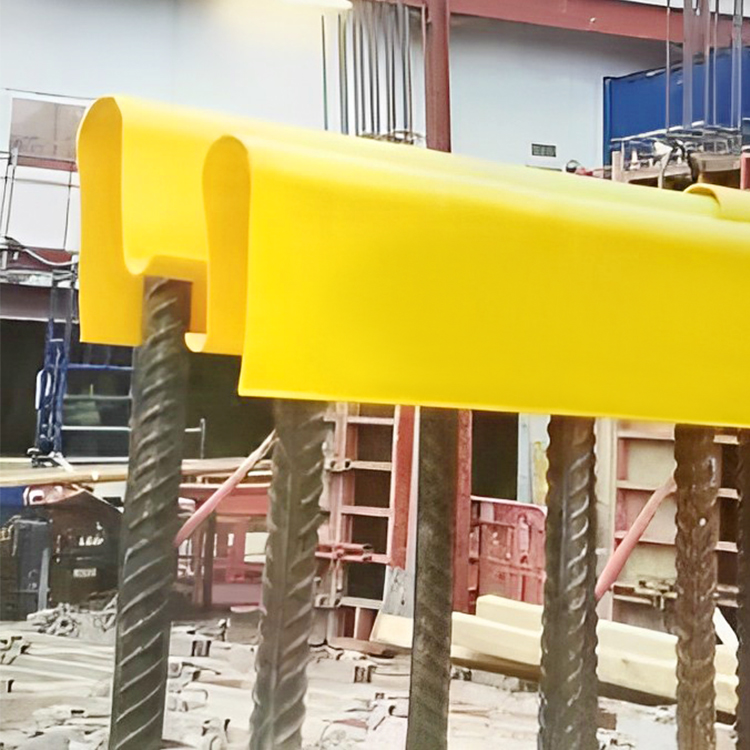
Minimizing On-Site Risks: The Critical Role of Rebar Safety Strips in Large-Scale Construction
From the perspective of a construction site safety manager, few hazards are as persistent, underestimated, and potentially severe as exposed reinforcing steel. On large-scale construction sites—whether infrastructure projects, commercial buildings, or high-rise developments—rebar-related injuries remain a recurring safety challenge.
Despite clear regulations and increasing awareness, incidents involving exposed rebar continue to appear in safety reports worldwide. This is where the Rebar Safety Strip plays a critical role—not as an optional accessory, but as a core component of systematic on-site risk management.
This article examines common rebar-related injuries, explains why they remain difficult to control, and analyzes how standardized installation of Rebar Safety Strip systems supports injury prevention, safety audits, and regulatory compliance from a safety manager’s point of view.
1. Rebar Hazards: A Persistent Risk on Construction Sites
Reinforcing steel is essential to concrete structures, but its physical characteristics make it inherently dangerous during construction phases.
Exposed rebar often presents the following risks:
- Sharp edges capable of causing deep lacerations
- Rigid vertical projections that increase impalement risk
- Poor visibility in crowded or low-light work areas
For safety managers, rebar hazards are particularly challenging because they are widespread, repetitive, and constantly changing as construction progresses.
2. Common Rebar-Related Injury Scenarios
Understanding injury patterns is the first step in effective risk control. Based on site safety assessments and accident investigations, rebar injuries typically occur in predictable scenarios.
2.1 Slips, Trips, and Falls onto Exposed Rebar
One of the most severe categories of rebar injury involves falls. Workers operating on scaffolding, formwork, or uneven ground may lose balance and fall onto exposed steel bars. Without protection, these incidents can result in:
- Penetration injuries
- Severe internal trauma
- Fatal outcomes in extreme cases
Even a fall from a relatively low height can become life-threatening when exposed rebar is present.
2.2 Manual Handling and Movement Injuries
Rebar injuries are not limited to falls. Workers moving materials, bending steel, or navigating congested areas frequently suffer:
- Cuts to hands and arms
- Leg injuries from accidental contact
- Clothing entanglement leading to secondary accidents
From a safety manager’s perspective, these “minor” injuries still carry serious consequences, including lost workdays and failed safety inspections.
3. Why Rebar Hazards Are Often Under-Controlled
Despite clear awareness of the danger, rebar protection is sometimes inconsistently applied on construction sites. Several factors contribute to this issue.
- Temporary nature of rebar exposure leads to delayed protection
- Reliance on ad-hoc solutions instead of standardized systems
- Lack of accountability during fast-paced construction phases
As a result, exposed rebar often remains unprotected until late-stage inspections—precisely when accidents are most likely to occur.
4. The Rebar Safety Strip as a Preventive Control Measure
From a risk management standpoint, the Rebar Safety Strip represents a simple yet highly effective preventive measure. When installed correctly, it converts an uncontrolled hazard into a managed one.
A properly designed Rebar Safety Strip system typically:
- Covers sharp edges and protruding steel
- Provides high-visibility warning through bright colors
- Creates a physical barrier that reduces injury severity
Unlike warning signs or procedural controls, safety strips function as a physical control, which is always preferred in the hierarchy of hazard control.
5. Standardization: A Safety Manager’s Priority
One of the key advantages of using Rebar Safety Strip systems is the ability to standardize protection measures across the site.
5.1 Consistent Installation Reduces Human Error
Standardized Rebar Safety Strip installation ensures that:
- All exposed rebar ends are protected in the same manner
- Protection is immediately recognizable to workers and inspectors
- No area is overlooked due to subjective judgment
Consistency is critical when managing large teams and multiple subcontractors.
5.2 Clear Responsibility and Accountability
From a safety management perspective, standardized safety products simplify responsibility allocation. Installation requirements can be clearly defined in safety plans, method statements, and toolbox talks.
This clarity reduces disputes during inspections and strengthens overall site safety governance.
6. Supporting Safety Audits and Regulatory Compliance
Safety audits are an unavoidable part of modern construction. Whether conducted by internal safety teams, project owners, or regulatory authorities, audits often focus heavily on visible hazards—especially exposed rebar.
6.1 Audit Expectations Regarding Rebar Protection
During audits, inspectors typically assess:
- Whether exposed rebar is adequately protected
- If protection measures are consistent across the site
- Whether materials meet basic safety and durability standards
The use of a clearly identifiable Rebar Safety Strip helps demonstrate proactive risk control and compliance with safety expectations.
6.2 Documentation and Visual Evidence
From a safety manager’s standpoint, Rebar Safety Strip installation also provides strong visual evidence of compliance. This is particularly valuable when:
- Documenting safety measures for project owners
- Responding to regulatory inspections
- Preparing reports after near-miss incidents
Visible, standardized protection reflects a mature safety culture.
7. Integration into Daily Site Safety Management
A Rebar Safety Strip is most effective when integrated into daily safety routines rather than treated as an afterthought.
7.1 Toolbox Talks and Worker Awareness
Safety managers can use Rebar Safety Strip installation as a focal point during toolbox meetings. This reinforces hazard awareness and encourages workers to report unprotected rebar proactively.
7.2 Continuous Inspection and Maintenance
As construction progresses, rebar exposure changes daily. Rebar Safety Strip systems must be:
- Easy to install and remove
- Durable enough to withstand site conditions
- Simple to inspect visually
This practicality makes them suitable for continuous use rather than one-time installation.
8. Cost Control and Risk Reduction
From a project management perspective, safety measures are often evaluated in terms of cost versus benefit. Rebar Safety Strip systems perform strongly in this analysis.
They help reduce:
- Medical expenses from injuries
- Project delays due to accident investigations
- Financial penalties from failed safety audits
In contrast to the potential cost of a single serious accident, the investment in standardized Rebar Safety Strip protection is minimal.
9. Selecting a Reliable Rebar Safety Strip Manufacturer
Not all safety products deliver the same level of protection. For safety managers, choosing the right supplier is essential.
Key factors include:
- Material durability and impact resistance
- Secure fit on different rebar diameters
- High-visibility color consistency
- Stable supply for large-scale projects
A reliable manufacturer understands on-site realities and designs products accordingly.
10. Working with Us for Professional Rebar Safety Strip Solutions
As a professional manufacturer specializing in Rebar Safety Strip systems, we focus on helping construction projects improve on-site risk control and safety audit performance. Our products are designed for real construction environments, supporting standardized installation, high visibility, and long-term durability.
We work closely with contractors, safety managers, and project owners to provide:
- Stable quality and consistent specifications
- Scalable supply for large construction sites
- Technical support for safety planning and implementation
If your project requires dependable Rebar Safety Strip solutions that align with modern safety management standards, we welcome you to contact us for product details, technical consultation, and long-term cooperation.