
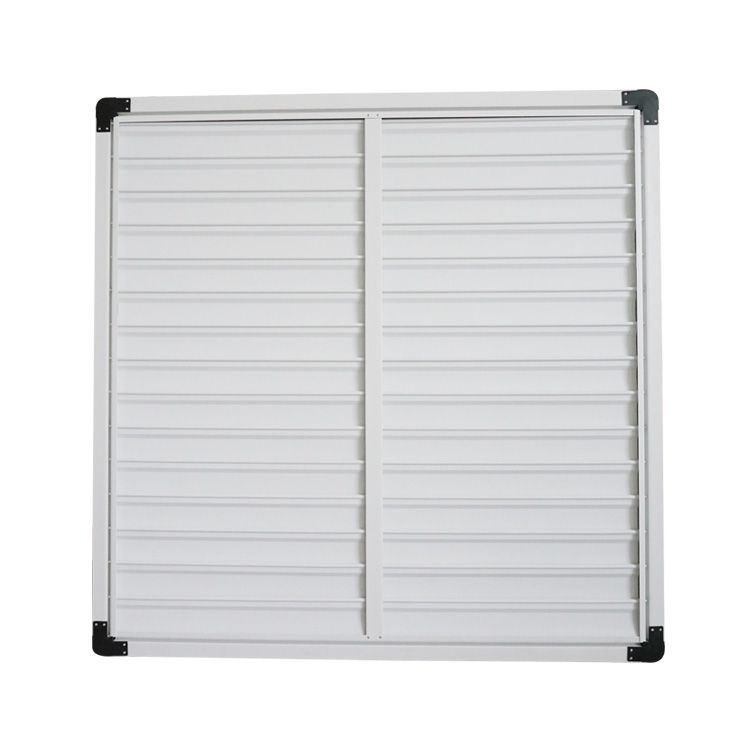
A comprehensive guide to optimizing industrial ventilation using high-performance thermoplastic shutters and gravity-driven airflow solutions.
Understanding the Functionality of a PVC Gravity Louver
In the realm of industrial ventilation, the movement of air must be both controlled and efficient. A pvc gravity louver serves as a critical component in this process, functioning as a non-return valve for air. Unlike motorized shutters that require electrical input to open and close, these louvers operate based on the pressure differential created by exhaust fans. When the fan is active, the blades lift to allow air to escape; when the fan stops, gravity pulls the blades back into a sealed position. This simple yet effective mechanism prevents backdrafts, protects against pest infiltration, and blocks external debris from entering the facility.
The efficiency of a pvc gravity louver depends heavily on the precision of its blade design and the quality of the pivot points. In industrial settings where airflow volume is high, the louvers must be light enough to respond to low pressure yet durable enough to withstand constant cycling. High-quality thermoplastic resins ensure that the blades remain rigid under pressure without warping over time. This balance of lightweight responsiveness and structural integrity makes the gravity-driven system an energy-efficient choice for warehouses, factories, and agricultural buildings where minimizing operational costs is a priority.
Furthermore, the operational silence of these systems is a notable advantage. In large-scale installations, the noise generated by mechanical dampers can be significant. However, the smooth operation of a pvc gravity louver minimizes mechanical vibration. By choosing a system designed with aerodynamic blade profiles, facility managers can significantly reduce the static pressure loss of their ventilation system, ensuring that the exhaust fans operate at peak efficiency without unnecessary resistance.
Why Material Choice Matters: The Advantages of PVC
Selecting the right material for industrial louvers is a decision that impacts the long-term maintenance costs and the overall lifespan of the ventilation system. While aluminum and galvanized steel were once the standard, the pvc gravity louver has emerged as the superior choice for modern industrial applications. PVC, or polyvinyl chloride, is inherently resistant to corrosion, rust, and chemical degradation. This is particularly vital in environments such as chemical processing plants, coastal facilities with high salt air, or livestock housing where ammonia levels can quickly erode metal components.
The chemical stability of PVC ensures that the louvers do not pit or weaken when exposed to moisture or industrial cleaning agents. Unlike metal louvers, which may require frequent painting or anti-corrosion treatments, a PVC system maintains its structural integrity and aesthetic appearance throughout its service life. Additionally, PVC is a poor conductor of heat, which helps in maintaining the thermal envelope of a building. In temperature-controlled environments, this insulation property reduces the risk of condensation forming on the louver blades, which could otherwise lead to mold growth or water dripping into the facility.
From a manufacturing perspective, the extrusion process used for PVC allows for more complex and effective aerodynamic shapes. These profiles can be engineered to include integrated seals that provide a tighter closure when the louver is in the "off" position. This precision reduces air leakage and prevents energy loss during the winter months. When you invest in a pvc gravity louver, you are investing in a product that resists the harsh realities of industrial environments while providing a maintenance-free solution for years to come.
Key Technical Specifications for Industrial Selection
When selecting a pvc gravity louver for an industrial airflow system, several technical specifications must be evaluated to ensure compatibility. The first is the face velocity of the airflow. Each louver design has a maximum rated velocity; exceeding this can lead to "blade flutter" or structural failure. It is essential to match the louver size to the cubic feet per minute (CFM) output of your exhaust fan. A louver that is too small will create excessive backpressure, forcing the fan to work harder and increasing energy consumption, while a louver that is too large may not open fully, leading to poor air distribution.
Another critical factor is the UV resistance of the PVC material. Since these louvers are typically installed on the exterior walls of buildings, they are subjected to intense sunlight. Standard PVC can become brittle and yellow over time when exposed to UV radiation. Therefore, industrial-grade louvers should be manufactured with high-quality UV stabilizers. This ensures that the blades remain flexible and impact-resistant even after decades of sun exposure. Additionally, check for the presence of reinforced frames. While the blades should be light, the frame that holds them must be rigid enough to prevent racking or twisting during installation.
Finally, consider the sealing mechanism. Many high-end models feature a "felt" or "rubber" edge on the blades to reduce noise and improve the airtight seal when closed. In facilities where dust control or bio-security is paramount—such as in food processing or high-tech manufacturing—the quality of this seal is non-negotiable. Evaluating these technical details during the procurement phase will prevent costly replacements and ensure that your ventilation system meets the required environmental standards.
Installation Best Practices for Longevity
Proper installation is just as important as the quality of the pvc gravity louver itself. One of the most common mistakes in industrial installations is improper leveling. If the frame is not perfectly level and plumb, the blades may bind or fail to close completely under their own weight. This leaves the facility vulnerable to weather and pests. It is recommended to use high-quality silicone sealants around the perimeter of the frame to ensure a watertight bond with the building's exterior cladding, preventing moisture from seeping into the wall cavity.
Maintenance, though minimal for PVC products, should still be part of a facility's annual checklist. Dust and grease can accumulate on the pivot points of the blades, especially in woodworking shops or commercial kitchens. A simple cleaning with mild soap and water is usually sufficient to restore smooth operation. Avoid using petroleum-based lubricants on PVC pivot points, as these can attract more dust and eventually gum up the mechanism. Instead, if lubrication is needed, a dry silicone spray is the best choice to keep the blades moving freely without attracting contaminants.
In regions prone to high winds or extreme weather events, it is also wise to inspect the tension of the blades. Some industrial systems allow for minor adjustments to the blade weighting to compensate for local wind conditions. By ensuring that the louvers remain closed during heavy wind gusts (when the fan is off), you protect the interior of the building from wind-driven rain. A well-installed and maintained pvc gravity louver provides a reliable barrier that balances the need for high-volume exhaust with the necessity of environmental protection.
The Shangyu Advantage: Excellence in Plastic Extrusion
At Shangyu, we understand the complexities of industrial airflow. As a leading manufacturer specializing in high-quality plastic profiles, we have dedicated years to perfecting the design of our ventilation products. Our PVC gravity louver solutions are engineered for durability, utilizing premium raw materials that withstand the most demanding industrial environments. We pride ourselves on our precision extrusion capabilities, ensuring that every blade and frame component meets strict tolerances for fit and finish.
Our product range includes a variety of specialized components designed to complement your airflow systems. Beyond our standard louvers, we offer high-performance pvc extrusion profile options and pvc pipe systems for comprehensive industrial infrastructure. Shangyu's commitment to innovation means our products are UV-stabilized, impact-resistant, and designed for easy installation. Whether you are outfitting a new factory or retrofitting an existing ventilation system, our technical team is available to help you select the exact specifications required for your unique project.
By choosing Shangyu, you are partnering with a manufacturer that prioritizes quality and customer satisfaction. Our global export experience ensures that we can deliver reliable solutions to projects worldwide, adhering to international safety and quality standards. From pvc electrical conduit for protecting your facility's wiring to specialized white pvc fan shutter units, Shangyu is your one-stop shop for professional plastic solutions.
Frequently Asked Questions
Q1: What is the primary benefit of installing a PVC gravity louver?
The primary benefit of a pvc gravity louver is its ability to provide maintenance-free, corrosion-resistant ventilation. Unlike metal alternatives, it does not rust or require painting, making it ideal for harsh industrial environments while ensuring energy-efficient, one-way airflow.
Q2: How does a PVC gravity louver handle extreme temperatures?
Industrial-grade pvc gravity louver systems are designed to operate within a wide temperature range. High-quality PVC formulations prevent the blades from becoming brittle in extreme cold or sagging in high heat, maintaining consistent performance across all seasons.
Q3: Can a PVC gravity louver be customized for specific sizes?
Yes, because the components are manufactured via extrusion, a pvc gravity louver can often be customized in terms of width and height to fit specific wall openings or fan dimensions, ensuring a perfect seal and optimal airflow for any industrial layout.
Q4: Does a PVC gravity louver require an external power source?
No, a pvc gravity louver operates entirely on the kinetic energy of the moving air and the force of gravity. This makes it an exceptionally cost-effective solution as it requires no wiring, motors, or electricity to function properly.
Q5: How long does a typical PVC gravity louver last in an industrial setting?
When properly installed and manufactured with UV stabilizers, a pvc gravity louver can last for 15 to 20 years or more. Its resistance to chemical rot and environmental degradation ensures a much longer service life than traditional wood or lightweight metal shutters.
Ready to Optimize Your Airflow?
Contact the experts at Shangyu today for a custom quote on high-performance ventilation solutions.