
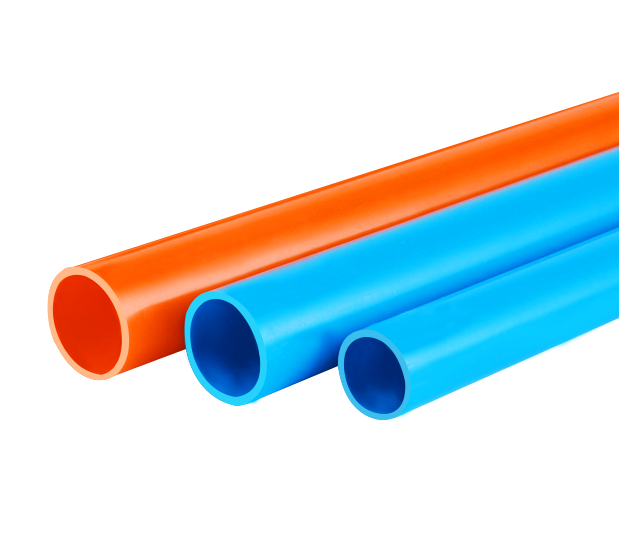
PVC Conduit Safety Standards: Ensuring Compliance in High-Voltage Electrical Projects
PVC Conduit plays a critical role in modern electrical infrastructure, especially in high-voltage and safety-sensitive projects. Its primary function goes far beyond cable routing—it is responsible for electrical insulation, fire protection, mechanical shielding, and long-term system reliability under harsh environmental conditions.
As electrical systems become more complex and regulatory requirements more stringent, understanding PVC Conduit safety standards is essential for engineers, contractors, and project owners. This article focuses on fire resistance, insulation strength, compliance certifications, and the performance of PVC Conduit under extreme cold and heat.
1. Why Safety Compliance Matters in High-Voltage Electrical Systems
In high-voltage electrical installations, failure is not an option. A single conduit failure can result in short circuits, fire hazards, equipment damage, or even personal injury.
PVC Conduit is widely adopted because it provides a controlled and standardized protection layer for electrical wiring, helping systems meet both safety regulations and long-term operational demands.
1.1 Electrical Insulation as a Core Safety Function
Unlike metal conduits, PVC Conduit is inherently non-conductive. This property significantly reduces the risk of electrical shock and short circuits, especially in high-voltage environments.
Key insulation advantages include:
- High dielectric strength
- Stable insulation performance over time
- No need for additional grounding
These characteristics make PVC Conduit particularly suitable for power distribution, industrial control systems, and infrastructure projects where electrical safety is paramount.
2. Fire Resistance and Flame-Retardant Performance of PVC Conduit
Fire safety is one of the most critical compliance requirements for electrical conduit systems.
2.1 Flame-Retardant Properties of PVC Material
PVC Conduit is naturally flame-retardant due to the chlorine content in its polymer structure. When exposed to fire, PVC tends to self-extinguish once the ignition source is removed, unlike many other plastics that continue to burn.
This behavior helps:
- Slow down fire propagation along cable routes
- Reduce damage to adjacent systems
- Increase evacuation and response time
For high-voltage projects, flame-retardant PVC Conduit provides an added layer of passive fire protection.
2.2 UL Certification and Fire Rating Standards
In many international markets, UL certification is a key indicator of fire safety compliance. UL-listed PVC Conduit must pass rigorous testing, including:
- Flame spread evaluation
- Heat deformation resistance
- Impact resistance after thermal exposure
Using UL-certified PVC Conduit helps ensure that electrical installations comply with regulatory requirements and project specifications, particularly in commercial buildings, data centers, and industrial facilities.
3. Insulation Strength and Mechanical Protection
Beyond fire resistance, PVC Conduit must protect electrical cables from mechanical stress and environmental exposure.
3.1 Dielectric Strength in High-Voltage Applications
PVC Conduit is engineered to withstand high electrical stress without breakdown. Its dielectric strength allows it to safely isolate conductors even in high-voltage circuits, preventing leakage current and insulation failure.
This is especially important in:
- Power substations
- Industrial automation systems
- Renewable energy installations
Consistent insulation performance ensures system stability and reduces maintenance risks.
3.2 Resistance to Impact and External Damage
Electrical conduits are often installed in areas exposed to physical stress, such as construction sites, underground trenches, or industrial environments.
PVC Conduit offers:
- High impact resistance
- Flexibility under load without cracking
- Protection against abrasion and vibration
These features help preserve cable integrity and prevent costly electrical faults.
4. Performance of PVC Conduit in Extreme Temperature Conditions
Electrical systems are frequently exposed to harsh climates. A compliant PVC Conduit must maintain performance in both extreme cold and extreme heat.
4.1 Cold Weather Performance
In low-temperature environments, inferior materials can become brittle and prone to cracking. Properly formulated PVC Conduit is designed to maintain toughness and flexibility even in cold conditions.
Cold-resistant PVC Conduit is widely used in:
- Outdoor power distribution
- Infrastructure projects in cold regions
- Underground electrical installations
This ensures long-term reliability without premature failure.
4.2 High-Temperature Resistance and Dimensional Stability
In hot climates or enclosed electrical spaces, conduits may be exposed to elevated temperatures. High-quality PVC Conduit resists deformation and maintains dimensional stability within its rated temperature range.
Key benefits include:
- Stable internal diameter for cable routing
- Reduced risk of sagging or warping
- Consistent protection over long service life
This makes PVC Conduit suitable for both indoor and outdoor high-temperature environments.
5. Weather Resistance and Environmental Protection
Outdoor electrical installations face continuous exposure to weather elements.
5.1 UV Resistance for Outdoor Applications
Without proper UV stabilization, plastic materials can degrade under prolonged sunlight exposure. Industrial-grade PVC Conduit can be formulated with UV-resistant additives to prevent:
- Surface cracking
- Color fading
- Loss of mechanical strength
This is critical for rooftop installations, open-field power systems, and infrastructure projects.
5.2 Moisture and Corrosion Resistance
Unlike metal conduits, PVC Conduit does not corrode when exposed to moisture, salt air, or chemicals. This corrosion resistance significantly extends service life in:
- Coastal environments
- Underground installations
- Chemical and industrial plants
PVC Conduit maintains its protective function even in highly corrosive conditions.
6. Compliance with International Electrical Standards
For global projects, PVC Conduit must meet diverse regulatory requirements across regions.
Common compliance considerations include:
- UL standards for North American markets
- Flame-retardant and insulation classifications
- Mechanical and environmental performance tests
Selecting compliant PVC Conduit simplifies approval processes and reduces project risk.
7. Customization of PVC Conduit for Specialized Projects
Not all electrical projects have the same requirements. Customization is often necessary to meet specific safety and installation needs.
PVC Conduit can be customized in terms of:
- Wall thickness for different protection levels
- Color coding for system identification
- Enhanced flame-retardant formulations
- Improved impact or temperature resistance
Customization allows PVC Conduit to align precisely with project specifications and safety standards.
8. Manufacturing Quality and Its Impact on Safety Performance
The safety performance of PVC Conduit depends heavily on manufacturing technology and quality control.
Advanced extrusion processes ensure:
- Uniform wall thickness
- Consistent insulation properties
- Reliable mechanical strength
Manufacturers using modern extrusion equipment and strict quality control systems can deliver PVC Conduit that performs consistently in demanding electrical environments.
9. Reliable PVC Conduit Solutions from an Experienced Manufacturer
As electrical systems evolve toward higher voltage, greater complexity, and stricter safety requirements, the importance of compliant and reliable PVC Conduit continues to grow.
Dongguan Shangyu Plastic Hardware Products Company Limited is located in Dongguan City, Guangdong Province, China—an internationally recognized manufacturing center with convenient access to Hong Kong and Guangzhou.
We are a professional manufacturer of PVC plastic extrusion products, including PVC Conduit, PVC pipes, PVC tubes, PVC profiles, PVC gravity louvers, PVC shutters, and PVC road barriers. With independent design, engineering, quality control, and sales departments, we support customized PVC Conduit solutions based on customer drawings or samples.
Our dual-screw extrusion machines enable direct extrusion from PVC powder, ensuring full plastification, stable quality, and effective cost control. We continuously improve PVC Conduit performance to meet demanding requirements such as flame retardancy, high insulation strength, UV resistance, aging resistance, impact resistance, and extreme temperature performance.
With over 10 years of industry experience among our key personnel, we provide OEM and ODM services to customers in America, Japan, the European Union, and other global markets. Through compliant products, reliable quality, and responsive support, we help our partners deliver safe and dependable electrical systems using high-performance PVC Conduit.