
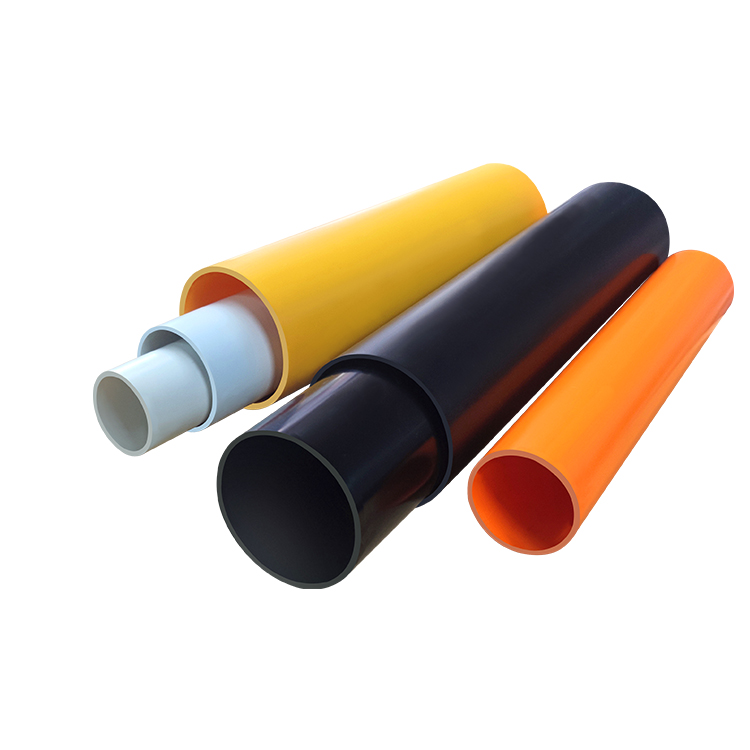
The Science of PVC Tubing: Understanding Chemical Resistance and Industrial Customization
PVC Tubing has become a core material solution across modern industries, from chemical processing and food manufacturing to construction, agriculture, and industrial fluid transfer. Its widespread adoption is not accidental. Behind its simple appearance lies a carefully engineered balance of chemical stability, mechanical performance, and customization flexibility that traditional materials often struggle to match.
This article takes a deeper, science-based look at PVC Tubing—how it maintains chemical resistance when transporting acids, alkalis, and food-grade liquids, and how manufacturers can tailor hardness, transparency, and structure to meet highly specific industrial requirements.
1. Why PVC Tubing Performs So Well in Chemical Environments
At the molecular level, PVC (polyvinyl chloride) is a thermoplastic polymer formed by polymerizing vinyl chloride monomers. The resulting structure gives PVC Tubing several intrinsic advantages when used for liquid and fluid transport.
1.1 Molecular Structure and Chemical Stability
PVC’s backbone consists of strong carbon–carbon bonds, with chlorine atoms attached to the polymer chain. This structure provides:
- High resistance to oxidation
- Low reactivity with most inorganic chemicals
- Minimal absorption of liquids
As a result, PVC Tubing does not easily degrade, swell, or dissolve when exposed to a wide range of chemical substances under normal operating conditions.
1.2 Resistance to Corrosion Compared to Metal Tubes
Unlike metal tubing, PVC Tubing does not rust, pit, or corrode. This is particularly important in systems where:
- Liquids contain dissolved salts or reactive ions
- Long-term exposure leads to gradual material breakdown
- Clean internal surfaces are required to maintain flow consistency
In industrial environments, corrosion-related failure is one of the main reasons for system downtime. PVC Tubing avoids this issue entirely, offering a stable internal surface throughout its service life.
2. Chemical Resistance of PVC Tubing for Different Types of Liquids
One of the most important selection criteria for PVC Tubing is its compatibility with the fluids it transports. Below is a closer look at how PVC Tubing performs with different categories of liquids.
2.1 Acid Transport Applications
PVC Tubing shows excellent resistance to many common inorganic acids, including:
- Hydrochloric acid
- Sulfuric acid (at appropriate concentrations)
- Phosphoric acid
Because PVC does not react chemically with these substances, it maintains:
- Structural integrity
- Dimensional stability
- Smooth internal surfaces
This makes PVC Tubing a preferred option in chemical dosing systems, laboratory setups, and industrial processing lines where acid exposure is continuous or repetitive.
2.2 Alkali and Base Resistance
Strong alkalis, such as sodium hydroxide and potassium hydroxide, can be highly destructive to certain metals and elastomers. PVC Tubing, however, remains stable in alkaline environments, especially at ambient and moderate temperatures.
This property makes it suitable for:
- Wastewater treatment systems
- Industrial cleaning and CIP (clean-in-place) systems
- Chemical transfer lines in manufacturing facilities
The ability of PVC Tubing to resist both acids and alkalis simplifies material selection for systems handling multiple chemical types.
2.3 Food-Grade and Beverage Liquids
For food and beverage applications, chemical resistance must be combined with safety and purity. PVC Tubing can be formulated to meet food-contact requirements by using:
- Non-toxic plasticizers
- Stabilizers compliant with food regulations
- Controlled production environments
When properly specified, PVC Tubing does not impart taste, odor, or color to liquids such as:
- Drinking water
- Juices and syrups
- Dairy and liquid food ingredients
This is why food-grade PVC Tubing is widely used in processing plants, filling lines, and beverage dispensing systems.
3. Understanding Hardness Customization in PVC Tubing
One of the defining advantages of PVC Tubing is its adjustable hardness. Unlike many rigid materials, PVC can be engineered across a wide Shore hardness range.
3.1 How Hardness Is Controlled
Hardness in PVC Tubing is primarily adjusted through the type and proportion of plasticizers added during formulation. By fine-tuning this balance, manufacturers can produce tubing that is:
- Rigid and shape-retaining
- Semi-flexible for guided routing
- Highly flexible for tight bends and movement
3.2 Matching Hardness to Application Needs
Different industries require different mechanical behaviors:
- Soft PVC Tubing
Used where flexibility, vibration absorption, or frequent movement is required, such as peristaltic pumps or mobile equipment. - Medium-Hardness PVC Tubing
Balances flexibility and structural support, ideal for general fluid transfer lines. - Rigid PVC Tubing
Provides dimensional stability and pressure resistance for fixed installations.
This ability to customize hardness allows PVC Tubing to serve roles that would otherwise require multiple material types.
4. Transparency and Visual Control in PVC Tubing
Transparency is another critical customization factor, especially in applications where visual monitoring is essential.
4.1 Why Transparency Matters
Transparent or semi-transparent PVC Tubing allows operators to:
- Monitor fluid flow
- Detect air bubbles or blockages
- Observe color changes or contamination
This is particularly valuable in laboratories, food processing, and medical or dosing systems.
4.2 Controlling Transparency During Production
Transparency is achieved by carefully selecting:
- Resin purity
- Plasticizer clarity
- Processing temperature and extrusion parameters
High-quality PVC Tubing can achieve excellent optical clarity while maintaining chemical and mechanical performance.
5. Industrial Customization Beyond Basic Dimensions
PVC Tubing customization goes far beyond diameter and wall thickness. Industrial users often require performance-enhancing features.
5.1 Functional Performance Enhancements
Depending on the application, PVC Tubing can be engineered with:
- UV resistance for outdoor use
- Anti-aging formulations for long service life
- Impact resistance for mechanical protection
- Flame-retardant properties for safety-critical environments
- Anti-static performance for sensitive industrial settings
5.2 Custom Profiles and Integrated Designs
Through extrusion technology, PVC Tubing can also be produced as:
- Multi-channel tubing
- Reinforced tubing with structural layers
- Integrated profiles combining tubing and support features
These designs reduce assembly steps and improve system reliability.
6. Why Manufacturing Technology Matters for PVC Tubing Quality
The performance of PVC Tubing depends not only on material formulation but also on manufacturing capability.
Advanced extrusion methods, such as dual-screw extrusion, allow manufacturers to:
- Process PVC powder directly without granulation
- Achieve more uniform material plastification
- Maintain consistent wall thickness and surface quality
This directly affects chemical resistance, mechanical stability, and long-term reliability.
7. Choosing the Right PVC Tubing Partner for Industrial Applications
For industrial buyers, selecting PVC Tubing is only part of the decision. The manufacturer’s experience, engineering capability, and quality control systems are equally important.
A reliable supplier should offer:
- Custom mold development based on drawings or samples
- In-house design and engineering support
- Consistent quality inspection throughout production
- Experience serving international markets
These factors ensure that PVC Tubing performs as expected in real-world operating conditions.
8. From Material Science to Manufacturing: Our PVC Tubing Solutions
As industries demand higher chemical stability, longer service life, and greater customization, PVC Tubing continues to prove its value as a versatile and reliable solution.
Dongguan Shangyu Plastic Hardware Products Company Limited is located in Dongguan City, Guangdong Province, China—an internationally recognized manufacturing hub conveniently close to Hong Kong and Guangzhou.
We are a professional manufacturer of PVC plastic extrusion products, including PVC Tubing, PVC pipes, PVC profiles, PVC gravity louvers, PVC shutters, and PVC road barriers. With independent design, engineering, quality control, and sales departments, we are capable of developing customized products based on customer drawings or samples.
Our dual-screw extrusion machines allow direct extrusion from PVC powder, eliminating the granulation process and enabling better cost control and fully plastified products. We continuously improve formulations to meet demanding requirements such as chemical resistance, UV resistance, aging resistance, impact strength, anti-static performance, and flame retardancy.
With over 10 years of industry experience among our key personnel, we provide OEM and ODM solutions to customers across America, Japan, the European Union, and other global markets. Through customized products, stable quality, reasonable pricing, and reliable after-sales service, we support our partners in building long-term, competitive product lines based on high-performance PVC Tubing.